
God Blessing Trending Prompt
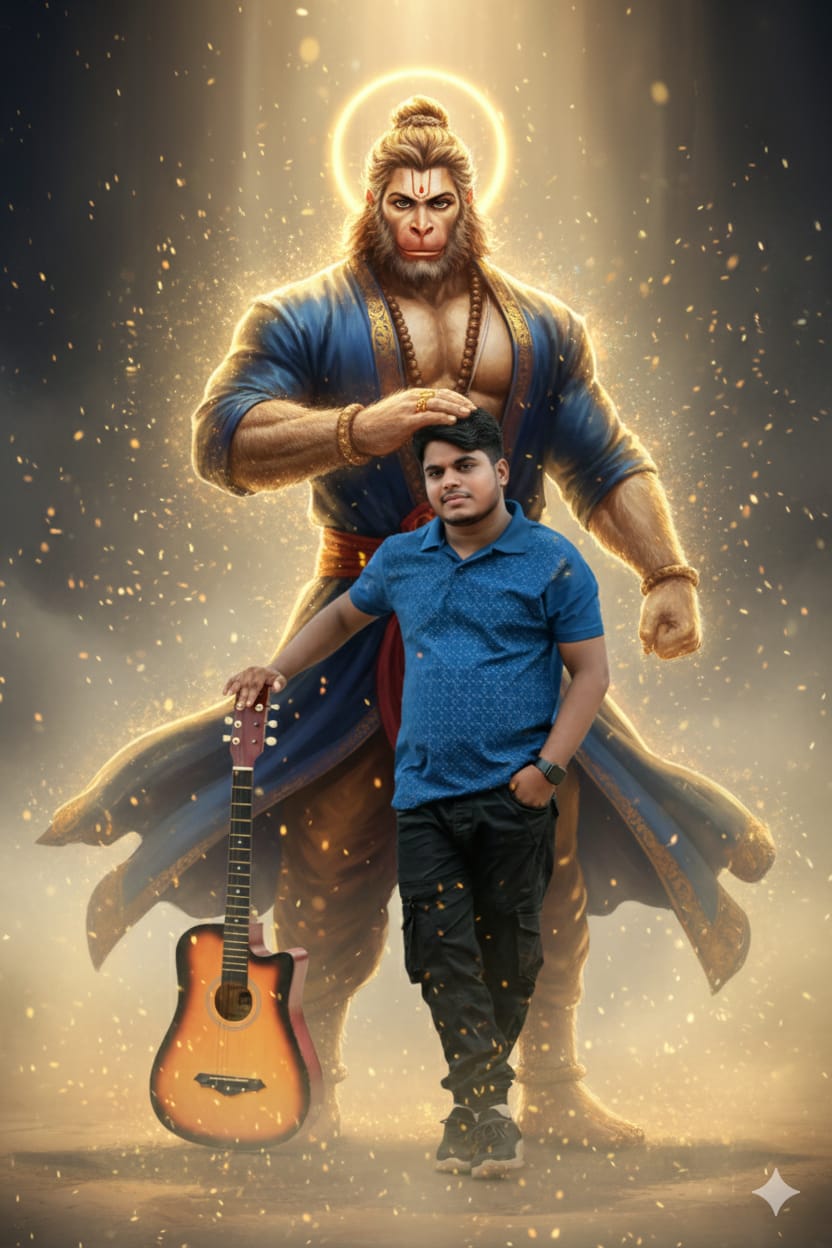
Ultra-realistic cinematic digital
art of God Hanuman Ji standing behind a me, Hanuman Ji blessing him by gently placing one hand on his head and make full photo. HANUMAN JI is wearnig a blue coat paint glowing golden aura
and halo around his head,
dramatic lighting. dust
particles, smoky atmosphere, golden sparks floating in air.
Hyper-detailed muscles,
realistic skin texture, sharp focus, Cinematic composition, low angle shot, 8K ultra HD.high contrast, volumetric
lighting,
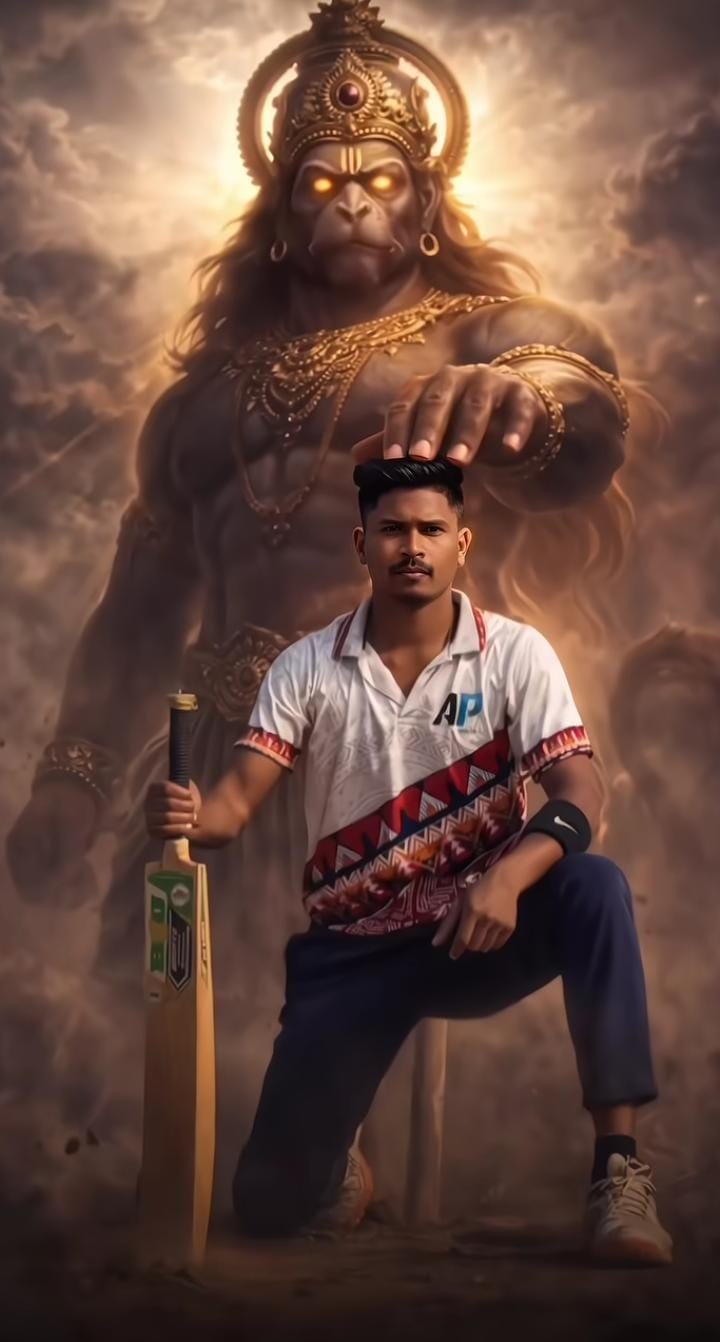
Ultra-realistic cinematic
digital art of Lord Hanuman
(Bajrangbali) standing behind a me, Hanuman blessing him by gently placing one hand on his head and make full photo.
Lord Hanuman is tal, muscular,
divine, grey stone-like skin,
wearing golden crown (mukut), ornaments and dhoti, glowing golden aura and halo around his head, dramatic lighting.
dust particles, smoky
atmosphere, golden sparks
floating in air.
Hyper-detailed muscles, realistic skin texture, sharp focus.
Cinematic composition, low
angle shot, 8K ultra HD, high contrast, volumetric lighting,
godly glow, masterpiece, unreal
engine, ultra-realistic fantasy realism.
And same to same no any change in body.
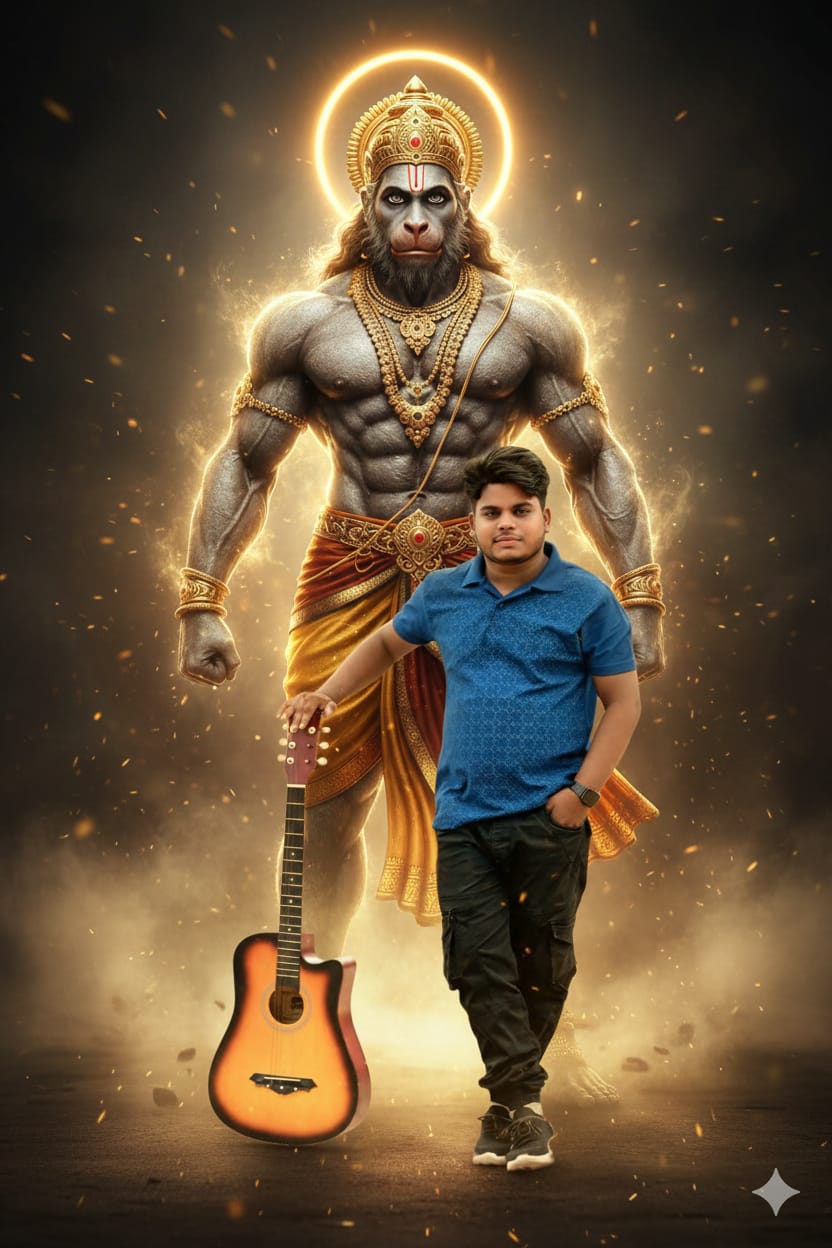
Ultra-realistic cinematic
digital art of Lord Hanuman
(Bajrangbali) standing behind a me, Hanuman blessing him by gently placing one hand on his head and make full photo.
Lord Hanuman is tal, muscular,
divine, grey stone-like skin,
wearing golden crown (mukut), ornaments and dhoti, glowing golden aura and halo around his head, dramatic lighting.
dust particles, smoky
atmosphere, golden sparks
floating in air.
Hyper-detailed muscles, realistic skin texture, sharp focus.
Cinematic composition, low
angle shot, 8K ultra HD, high contrast, volumetric lighting,
godly glow, masterpiece, unreal
engine, ultra-realistic fantasy realism.
And same to same no any change in body.
AI Image Creation Is Easy — Getting Good Results Is Not
Yes, anyone can generate an AI image in seconds. But generating a useful image is different from generating a random image. Many creators produce dozens of visuals that look impressive but are not usable for blogs, thumbnails, or marketing.
The real skill is not generation — it is selection and direction.
Myth 1: Longer Prompts Always Give Better Images
Many beginners write very long prompts packed with style words, moods, camera types, emotions, and effects. This often confuses the model and produces mixed results.
Smart creators use:
-
Clear subject
-
One main style
-
One lighting type
-
One scene goal
Shorter, focused prompts often work better than overloaded ones.
Myth 2: Ultra Realistic Is Always Best
“Ultra realistic” is one of the most overused prompt phrases. But not every use case needs realism.
Better matches:
-
Blog diagrams → clean illustration style
-
Thumbnails → bold graphic style
-
Educational posts → flat visual style
-
Story content → cinematic style
Style should match purpose — not trend.
Common Mistake: Ignoring Text Space
Creators often generate beautiful images but forget to leave empty space for text. Then when adding blog titles or thumbnail words, everything looks crowded.
Pro tip: Add prompt phrases like:
-
“with negative space on left side”
-
“clean background area”
-
“copy space for text”
This makes images more usable.
The Preview Trap
Another hidden problem is falling in love with previews. Some AI images look amazing at small size but break when zoomed.
Always check:
-
Hands and fingers
-
Teeth and eyes
-
Object edges
-
Background distortions
-
Text artifacts
Never publish without zoom checking.
Smart Strategy: Generate for Cropping
Instead of generating the exact final frame, smart creators generate wider scenes and crop later. This gives flexibility for:
-
Different aspect ratios
-
Mobile vs desktop
-
Thumbnail vs banner
-
Reel vs blog header
Think flexible canvas, not fixed frame.
Style Drift Problem
When generating multiple images for one article, style often changes between outputs. This creates visual inconsistency.
Fix this by repeating anchor phrases like:
-
same color tone
-
same lens type
-
same art style
-
same lighting mood
Consistency beats randomness for branding.
When NOT to Use AI Images
Unique creators also know when to avoid AI images.
Avoid AI visuals when:
-
Real product accuracy is required
-
Legal or medical diagrams must be exact
-
Brand logo precision is needed
-
Step-by-step tutorials need real screenshots
AI is creative — not always precise.
The Human Touch Advantage
AI images perform best when combined with human finishing steps:
-
Add brand typography
-
Adjust colors slightly
-
Add real texture overlays
-
Combine with real photos
-
Use consistent framing
Hybrid visuals often look more trustworthy.
Measuring AI Image Success
Instead of asking “Does this look good?”, ask:
-
Did users click more?
-
Did watch time increase?
-
Did shares improve?
-
Did bounce rate drop?
Performance data matters more than visual drama.
The Creator Mindset Shift
Average users ask:
“Which AI tool is best?”
Smart creators ask:
“How should this image support my content goal?”
That mindset shift creates better results than any tool switch.
Conclusion
AI image creation is powerful, but results depend on strategy, not just prompts. By avoiding common myths, planning for usability, checking details, and refining outputs, creators can turn AI from a novelty tool into a serious creative asset. The future belongs not to those who generate the most images — but to those who generate the most useful ones.