
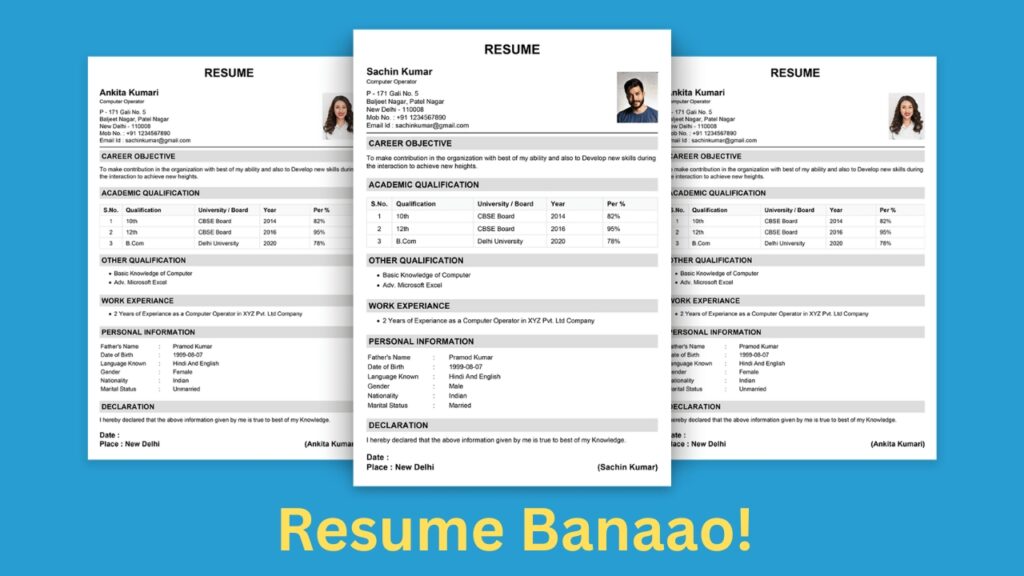
In today’s competitive job market, having a well-crafted resume is essential to stand out from the crowd. A professional resume not only highlights your skills and experience but also increases your chances of landing an interview. Whether you’re a fresh graduate or an experienced professional, understanding how to create an effective resume is crucial. This guide will walk you through the key elements of a strong resume, common mistakes to avoid, and tips to make your resume shine.
Why a Professional Resume Matters
Your resume is often the first impression you make on a potential employer. A well-structured resume can:
Showcase your qualifications and achievements
Demonstrate your professionalism and attention to detail
Help you pass Applicant Tracking Systems (ATS)
Increase your chances of getting shortlisted for an interview
A poorly written resume, on the other hand, can lead to missed opportunities, even if you’re highly qualified.
Key Sections of a Professional Resume
1. Contact Information
Start with your full name, phone number, professional email address, and LinkedIn profile (if applicable). Avoid using unprofessional email addresses.
2. Resume Summary or Objective
A brief 2-3 sentence summary highlighting your career goals and key strengths.
Summary (for experienced professionals):
*”Results-driven marketing manager with 5+ years of experience in digital campaigns, SEO, and brand strategy. Proven track record of increasing engagement by 40%.”*Objective (for freshers or career changers):
“Recent business graduate seeking an entry-level marketing role to apply analytical skills and creativity in a dynamic team environment.”
3. Work Experience
List your work history in reverse chronological order (most recent job first). Include:
Job title
Company name and location
Employment dates (month/year)
Key responsibilities and achievements (use bullet points)
Example:
Digital Marketing Specialist | XYZ Corp | Jan 2020 – Present
Increased website traffic by 50% through SEO and content marketing strategies.
Managed social media campaigns, boosting engagement by 35%.
4. Education
Include your highest degree first, along with the institution name, graduation year, and relevant coursework (if applicable).
Example:
MBA in Marketing | ABC University | 2019
5. Skills
Highlight both hard and soft skills relevant to the job.
Hard Skills: SEO, Data Analysis, Python, Graphic Design
Soft Skills: Leadership, Communication, Problem-Solving
6. Certifications & Training (Optional)
Mention any certifications that add value (e.g., Google Analytics, PMP, HubSpot Certification).
7. Additional Sections (If Applicable)
Projects (for students or freelancers)
Volunteer Work (to showcase leadership and community involvement)
Languages (if multilingual)
Common Resume Mistakes to Avoid
Spelling and Grammar Errors – Always proofread or use tools like Grammarly.
Using a Generic Resume – Tailor your resume for each job application.
Including Irrelevant Information – Keep it concise and job-focused.
Overloading with Buzzwords – Be specific about achievements instead of using clichés.
Poor Formatting – Use a clean, professional layout with consistent fonts.
How to Optimize Your Resume for ATS
Many companies use Applicant Tracking Systems (ATS) to filter resumes before they reach a human recruiter. To ensure your resume passes ATS:
Use standard headings (e.g., “Work Experience,” “Education”).
Incorporate relevant keywords from the job description.
Avoid images, tables, or complex formatting.
Save as a PDF (unless specified otherwise).
Final Tips for a Standout Resume
Keep it concise – Ideally 1 page for early-career professionals, 2 pages for experienced candidates.
Use action verbs – “Managed,” “Developed,” “Increased,” “Led.”
Quantify achievements – Use numbers to show impact (e.g., “Boosted sales by 20%”).
Get feedback – Ask a mentor or colleague to review your resume.
Conclusion
A professional resume is your ticket to securing job interviews and advancing your career. By following these guidelines—tailoring your resume, avoiding common mistakes, and optimizing for ATS—you can create a compelling document that highlights your strengths. Remember, your resume should evolve as you gain more experience, so update it regularly to reflect your latest achievements.
Start crafting your resume today and take the next step toward your dream job!