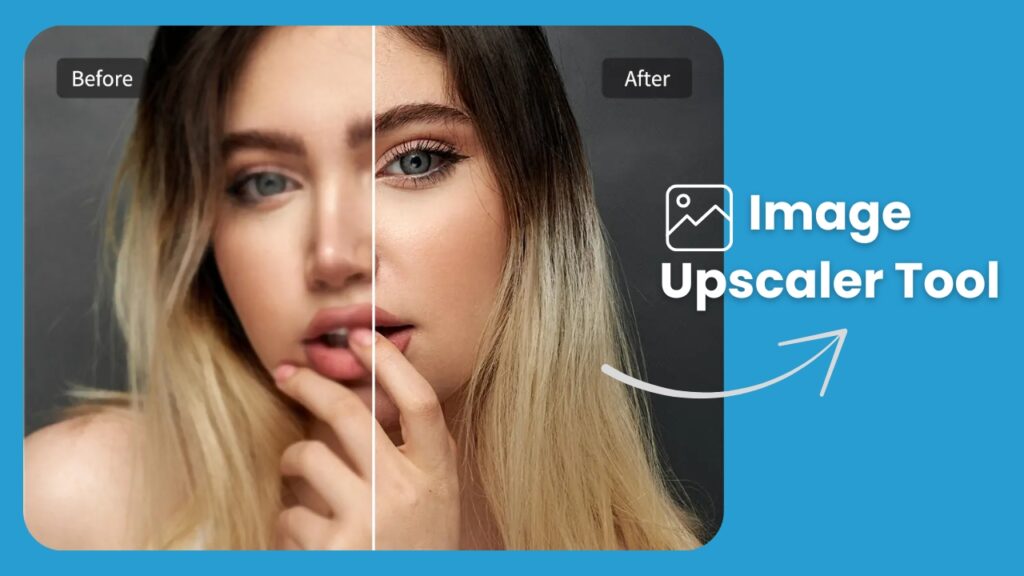
In the digital age, the demand for high-quality images is growing rapidly. Whether it’s photography, graphic design, or e-commerce websites, everyone wants crisp, clear, and high-resolution visuals. However, not all images are captured or stored in the best quality. This is where an image upscaler comes into play.
An image upscaler is a powerful tool that enhances the resolution and quality of low-resolution images using advanced AI algorithms. Unlike traditional resizing methods, which often result in pixelation and blurriness, modern AI-based upscalers can intelligently reconstruct details, making images sharper and more detailed.
In this article, we will explore how image upscaling works, its benefits, and some of the best tools available today.
How Does an Image Upscaler Work?
Traditional image enlargement methods, such as bicubic interpolation, simply stretch pixels, leading to a loss of quality. AI-powered upscalers, however, use deep learning and neural networks to analyze the image and predict missing details.
Key Technologies Behind AI Upscaling:
Deep Convolutional Neural Networks (CNN) – These analyze patterns in low-res images and generate high-res versions by filling in missing details.
Generative Adversarial Networks (GANs) – These consist of two neural networks (a generator and a discriminator) that work together to produce realistic high-quality images.
Super-Resolution Algorithms – These enhance image resolution beyond the original pixel count while maintaining clarity.
Benefits of Using an Image Upscaler
Enhanced Image Quality – Converts blurry or pixelated images into sharp, high-definition versions.
Preservation of Details – AI upscalers retain textures, edges, and fine details better than traditional methods.
Time and Cost-Efficient – Instead of reshooting or recreating images, upscaling provides a quick fix.
Useful for Multiple Industries –
E-commerce – Improves product image quality for better customer appeal.
Photography – Restores old or low-quality photos.
Gaming & Design – Enhances textures and graphics.
Printing – Ensures high-resolution outputs for banners, posters, and magazines.
Top AI Image Upscaling Tools in 2024
Topaz Gigapixel AI – One of the best for photographers, offering 600% upscaling with natural details.
Adobe Photoshop (Super Resolution) – Built-in AI upscaling for Photoshop users.
Let’s Enhance – A user-friendly online tool with batch processing.
Waifu2x – Popular for anime and artwork upscaling.
Deep Image AI – Great for both photos and digital art.
Limitations of Image Upscaling
While AI upscalers are impressive, they have some limitations:
Cannot Create True Details – If an image is extremely low-res, the AI may “guess” details inaccurately.
Artifacts & Over-Smoothing – Some tools may introduce unnatural textures.
Large File Sizes – Upscaled images can be significantly larger in size.
Future of Image Upscaling
With advancements in AI, future upscalers will likely:
Improve real-time upscaling for videos.
Offer better detail reconstruction for extremely low-quality images.
Integrate seamlessly with mobile apps and cloud services.
Conclusion
Image upscaling technology has revolutionized the way we enhance digital visuals. Whether you’re a photographer, designer, or business owner, AI-powered upscalers provide an efficient way to improve image quality without expensive reshoots. As AI continues to evolve, we can expect even more powerful and accessible upscaling solutions in the future.
For now, choosing the right tool depends on your needs—whether it’s for professional photography, digital art, or everyday image enhancement. Try out different upscalers and see which one works best for you!